China Top 10 Vegetal Protein Trends for Global Buyers

Time:2026-10-18 Author:Liam
0%

Global buyers are asking, “what are the latest trends in vegetal proteins?” The answer is becoming more practical, regional, and evidence-led. Plant protein now includes soy, pea, fava bean, chickpea, wheat, algae, and emerging fermentation ingredients. Each source brings different nutrition, texture, allergen, and supply-chain considerations.

The Good Food Institute reported that global investment in alternative proteins reached approximately US$2.9 billion in 2023. Its State of the Industry reports also identify fermentation and cultivated technologies as important innovation areas. Meanwhile, Innova Market Insights has highlighted “plant-based: the rise of flexitarianism” as a major consumer trend. Buyers are watching labels closely. They want shorter ingredient lists, stronger protein claims, and better sensory performance. Price still matters most.

“Plant-based meat needs to be cheaper, tastier, and more convenient than animal-based meat,” says Bruce Friedrich, co-founder and president of The Good Food Institute. His statement remains demanding, but useful. It shifts attention from novelty toward everyday purchasing behavior. A textured pea-protein product may perform well in a burger, yet fail in a beverage. Fava protein may offer strong functionality, but its flavor needs careful processing. That detail is easy to miss.

This overview examines the leading vegetal protein trends shaping global sourcing, formulation, and product development. It considers nutrition, clean-label expectations, regional crops, processing technology, and cost pressure. Some market forecasts appear optimistic. Real purchasing data may tell a less comfortable story. Reliable growth will depend on products that work in kitchens, not only in presentations.
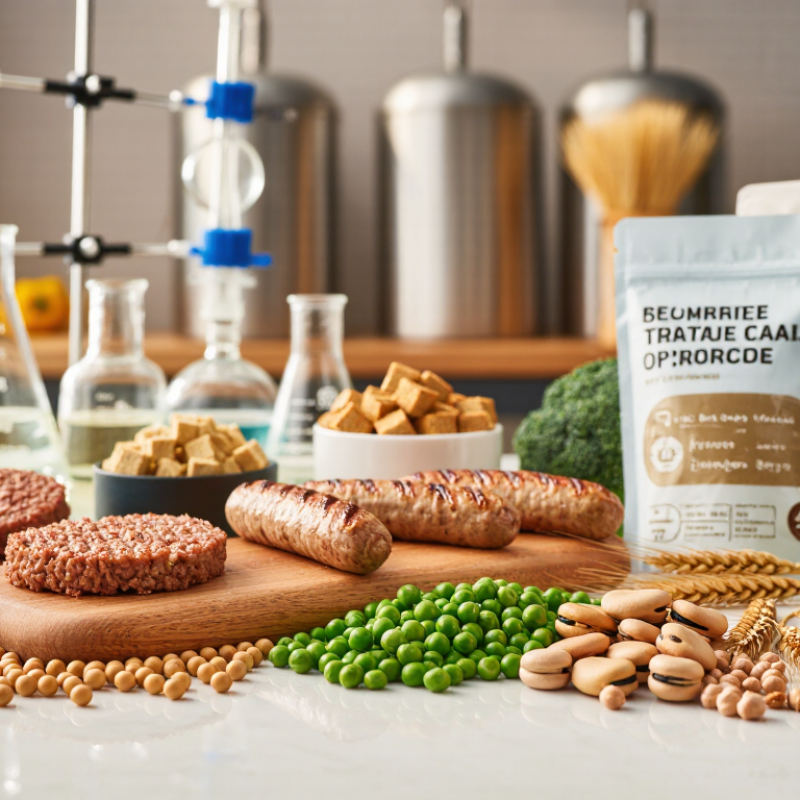
China Top 10 Vegetal Protein Trends for Global Buyers

China’s Plant Protein Market: Scope, Drivers, and Definitions

China’s plant protein market is broader than meat substitutes. For global buyers, its scope includes soy, pea, wheat, rice, fava bean, and mung bean proteins. It covers isolates, concentrates, textured formats, beverages, bakery fillings, nutrition powders, and prepared foods. Definitions matter. A protein ingredient is not automatically a finished plant-based food. Formulation, processing, and labeling determine its commercial category. Boundaries remain uneven across databases and jurisdictions, creating avoidable comparison errors.

The Good Food Institute APAC estimated China’s plant-based meat retail market at about US$1.4 billion in 2022. That figure is useful, but incomplete. It excludes many B2B ingredients and foodservice transactions. Grand View Research valued the global plant-based protein market at US$15.7 billion in 2023, forecasting a 12.2% CAGR through 2030. China therefore sits inside a larger supply chain, not one product niche.

Key drivers include protein diversification, urban convenience, soybean processing capacity, and interest in lower-impact foods. The OECD-FAO Agricultural Outlook 2024–2033 expects China to remain the world’s largest soybean importer, highlighting raw-material exposure. Buyers should test amino acid profiles, dispersibility, off-notes, allergen controls, and batch consistency. Taste still decides repeat purchase. That is the uncomfortable part. Forecasts may also mix ingredients with retail products, so procurement teams should verify definitions before comparing suppliers or growth rates.

China’s Top 10 Plant Protein Trends for Global Buyers

China’s plant protein market is supported by soybean-processing capacity, strong food-manufacturing demand, dietary diversification, sustainability considerations, and growing interest in convenient high-protein foods.

How to read the chart: The Buyer Relevance Index is a comparative 1–10 assessment of commercial relevance for international buyers. It synthesizes publicly documented supply, processing, regulatory, nutrition, and application factors; it is not a market-share statistic.
Market scope
Includes soy ingredients, pea and other pulse proteins, wheat gluten, rice protein, textured proteins, plant-based beverages, sports nutrition, and meat-alternative applications.
Main drivers
China is a major soybean-processing market, while demand is also shaped by protein enrichment, convenience foods, food-service innovation, and lower-impact ingredient sourcing.
Buyer priorities
Global buyers should compare protein content, amino-acid quality, solubility, flavor, texture, allergen status, traceability, certifications, and compliance with destination-country rules.

Reference framework: China National Health Commission dietary guidance, China Customs trade statistics, FAOSTAT agricultural statistics, Chinese food-safety standards, and publicly available industry research. Product categories are defined by their primary protein source or application.

The 10 Leading Plant Protein Trends in China

China Top 10 Vegetal Protein Trends for Global Buyers

China’s plant protein market is moving beyond traditional soy products. The 10 leading plant protein trends in China now include pea, fava bean, mung bean, oat, and mixed-protein formulas. Buyers are seeking local supply options with stable quality and flexible processing.

Taste remains a practical concern. Mild flavors, smooth textures, and lower beany notes influence repeat purchases. Extrusion technology is improving meat-like structures, while fermentation may support better flavor and digestibility. However, results vary between factories and batches. Samples should be tested in the final application, not judged only from a specification sheet.

Clean labels are gaining attention. Many manufacturers are reducing unnecessary additives and offering shorter ingredient lists. Protein powders, ready-to-drink beverages, snacks, noodles, and bakery fillings are expanding the application range. Some suppliers also provide organic, non-GMO, or allergen-management documentation, where legally applicable. Global buyers should verify certificates directly and review testing dates, production records, and traceability procedures.

Traceability matters more now. Buyers often request origin details, pesticide controls, microbiological results, and heavy-metal testing. Digital batch records can make recalls and quality reviews faster.

Sustainability is another growing factor, especially water use, processing energy, and packaging waste. Yet environmental claims are not always measured consistently. A careful procurement team should request clear boundaries and supporting data. Cost remains important, but the lowest quotation can hide weaker consistency, limited technical support, or higher reformulation risk. Small pilot orders are often wiser.

Key Ingredients, Technologies, and Product Formats

China Top 10 Vegetal Protein Trends for Global Buyers

China’s vegetal protein market is moving from basic powders toward cleaner, more functional ingredients. The first ten trends include pea, soy, fava bean, chickpea, rice, mycoprotein, wet extrusion, dry extrusion, fermentation, and blended proteins. Buyers increasingly request traceable origins, allergen control, and stable amino-acid performance.

The Good Food Institute estimated global plant-based meat, seafood, milk, yogurt, cheese, and egg retail sales at about US$29.9 billion in 2023. That scale supports wider ingredient investment, but purchasing decisions remain highly technical.

Pea and fava concentrates suit neutral-flavored beverages and nutrition powders. Soy still offers strong functionality, especially in minced products and structured pieces. Rice and chickpea proteins can soften earthy notes when blended carefully.

Wet extrusion creates fibrous whole-cut formats
Dry extrusion supports lower-cost mince and chunks

Fermentation is gaining attention for flavor reduction and digestibility, although processing claims need evidence.

Innova Market Insights identified plant-based innovation as a continuing global food trend in 2024, with texture and protein quality becoming stronger development priorities.

Product formats are also multiplying: ready-to-mix powders, high-protein drinks, filled bars, frozen dumplings, noodles, minced fillings, and shelf-stable meals. Small pack sizes help buyers test local demand before scaling.

Yet some textures still fail after freezing and reheating. That weakness deserves more honest testing.

Global buyers should compare dispersibility, solubility, microbial results, sensory scores, and carbon data, not only protein percentages.

The OECD-FAO Agricultural Outlook 2024–2033 also points to continuing pressure on global food systems, making efficient, measurable protein production increasingly important.

Quality, Safety, Sustainability, and Certification Standards

China Top 10 Vegetal Protein Trends for Global Buyers

Quality, safety, sustainability, and certification now shape China’s vegetal protein market. Buyers are watching peas, soy, fava beans, rice, and blended plant proteins. Each source needs different testing for allergens, moisture, purity, and microbial safety. A reliable supplier should provide batch records, traceability data, and clear laboratory results. In practice, small gaps can appear between factory samples and shipment quality. Regular third-party testing helps reduce that risk.

Sustainability claims require measurable evidence. Ask for information about water use, energy consumption, packaging materials, and agricultural sourcing. A lower-carbon claim without a defined calculation method deserves careful review. Certifications such as HACCP, ISO 22000, organic, or non-GMO may support market access. However, acceptance differs across countries and product categories. Buyers should verify certificate scope, issuing bodies, expiry dates, and covered facilities. Certification alone is not perfection.

Tips: Request a recent certificate package before sampling. Compare specifications with actual test reports. Check allergen controls at receiving, processing, and packing stages. Ask how complaints are investigated and corrected. Leave room for improvement; even strong systems can miss a seasonal crop variation.

Sourcing and Evaluation Priorities for Global Buyers

China Top 10 Vegetal Protein Trends for Global Buyers

Sourcing and Evaluation Priorities for Global Buyers

China’s vegetal protein market is expanding beyond soy. Pea, rice, wheat, chickpea, fava bean, lentil, mung bean, potato, hemp, and sunflower proteins are gaining attention. Buyers should evaluate more than protein percentage. Solubility, taste, texture, amino acid balance, and processing performance often decide commercial success. A powder that looks excellent on paper may create sediment in a beverage or weaken a meat alternative.

Reliable sourcing starts with supplier audits and lot-level documentation. Request certificates of analysis, origin records, allergen statements, microbiological results, and contaminant testing. Check whether specifications remain stable across seasons. Review production capacity, minimum order quantities, packaging protection, and realistic lead times. Test samples in the final application, not only in water. China’s export infrastructure can support flexible volumes, but communication gaps may still affect delivery or technical support. No checklist predicts every crop year.

Tips: Compare at least three samples using the same recipe. Measure dispersibility, odor, color, viscosity, and aftertaste. Ask for retained samples from several production lots. Confirm labeling and import requirements in the destination market. Do not choose only by price. A cheaper ingredient may require extra flavoring, filtration, or reformulation. Small pilot batches reveal problems early, although they cannot replace long-term supply checks.

FAQS

What does China’s plant protein market include?

It includes soy, pea, wheat, rice, fava bean, and mung bean proteins. Formats range from isolates and concentrates to textured proteins, beverages, fillings, powders, and prepared foods.

Is every plant protein ingredient a finished plant-based food?

No. Processing, formulation, and labeling determine the commercial category. A protein powder may remain an ingredient, not a finished food.

How large is China’s plant-based meat retail market?

It was estimated at about US$1.4 billion in 2022. This figure may exclude many ingredients and foodservice transactions.

Why should buyers compare market figures carefully?

Some forecasts combine ingredients, retail foods, and business-to-business sales. Definitions also vary across databases and countries. The comparison may be imperfect.

What is driving demand for plant proteins in China?

Protein diversification, urban convenience, soybean processing capacity, and interest in lower-impact foods are key drivers. Ready-to-cook products suit busy city households.

Which tests should buyers request before purchasing?

Ask for amino acid profiles, dispersibility, moisture, purity, microbial safety, allergen controls, off-note testing, and batch consistency. Taste matters most.

How can buyers reduce differences between samples and shipments?

Request batch records, traceability data, and recent laboratory reports. Use regular independent testing. Small gaps can still appear.

How should sustainability and certification claims be checked?

Ask for water, energy, packaging, and agricultural sourcing data. Verify certificate scope, expiry dates, issuing bodies, and covered facilities. Certification is not perfection.

Conclusion

China’s plant protein market is evolving from traditional soy and grain-based foods toward a broader ecosystem of innovative, nutritious, and sustainable ingredients. This article explores the market’s scope, major growth drivers, and key definitions, while highlighting the 10 leading trends shaping demand. These include improved taste and texture, diverse protein sources, clean-label formulations, high-protein nutrition, functional beverages, meat and dairy alternatives, convenient product formats, and applications designed for both mainstream and specialized consumers. It also considers how food technology is improving extraction, flavor management, processing efficiency, and product stability.

For global buyers asking “what are the latest trends in vegetal proteins,” the article provides a practical framework for evaluating Chinese suppliers and products. Key considerations include ingredient quality, food safety, traceability, sustainability, certifications, regulatory compliance, production capacity, customization, and supply reliability. Together, these factors can support informed sourcing decisions and help buyers identify plant protein solutions aligned with evolving consumer expectations and international market requirements.

Liam

Liam

Liam is a dedicated marketing professional with a profound expertise in the industry, where he excels at highlighting the unique advantages of our core products. With a keen understanding of market trends and consumer needs, Liam frequently updates our company’s professional blog, providing......