Why do food manufacturers use vegetal proteins? The answer reaches far beyond sustainability claims. Plant proteins can reduce dependence on animal ingredients, broaden product portfolios, and meet growing demand for affordable, recognizable foods. They also give manufacturers useful control over texture, nutrition, and formulation costs.
Dr. David Julian McClements, a food science professor and plant-based food researcher, has emphasized, “We need to develop foods that are nutritious, affordable, and sustainable.” That sentence captures the practical challenge. A pea-protein beverage must disperse smoothly, not settle at the bottle’s bottom. A soy-based burger needs binding strength, moisture retention, and a convincing bite. Oat, fava, rice, and potato proteins each behave differently under heat, pressure, and mixing.
There is no perfect ingredient.
This guide examines the top 10 reasons manufacturers choose plant proteins. These include supply flexibility, allergen strategy, protein fortification, clean-label positioning, and new product development. Plant proteins can also support vegetarian, vegan, and flexitarian products without requiring separate production concepts.
However, the industry still has weaknesses. Some formulations taste grassy, feel dry, or depend heavily on masking flavors. Processing may improve texture, but it can increase cost and complexity. Claims about sustainability also require careful measurement, not attractive packaging alone.
The strongest manufacturers test every detail. They examine amino-acid quality, digestibility, sensory acceptance, sourcing reliability, and performance after cooking. That discipline explains why vegetal proteins are becoming strategic tools, rather than simple substitutes.
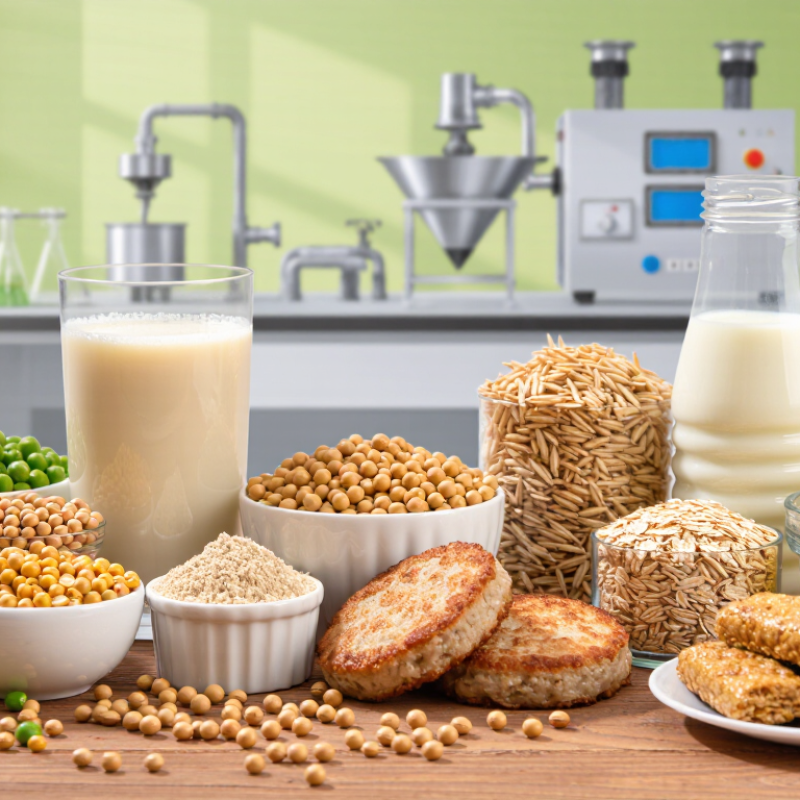
Plant proteins are concentrated proteins taken from peas, soybeans, rice, oats, lentils, and other crops. Food manufacturers add them to recipes for nutrition, texture, stability, and production flexibility. The best choice depends on the food, processing method, cost, and intended eating experience. Small differences matter.
In product development, formulators use plant proteins in beverages, nutrition bars, baked goods, sauces, and meat-free foods. These ingredients can increase protein content without relying on animal sources. They also bind water, support emulsions, improve foaming, and create a firmer bite. Some powders help dough hold moisture during baking. Others improve suspension in a drink. Plant proteins can also support simpler ingredient planning and more varied crop sourcing. Texture still matters.
Manufacturers test each protein through mixing, heating, cooling, and storage trials. Pea protein may add a noticeable earthy flavor. Soy protein can create useful structure but requires careful allergen communication. Rice protein may feel dry or gritty at higher levels. Nothing works everywhere. Heat, pH, salt, and oil can change performance inside the same recipe. Local labeling rules must guide every formulation and package statement. Pilot trials reveal problems that laboratory samples often hide. The result is not always elegant, but practical testing exposes what needs improvement.
| Rank | Reason for Use | What Plant Proteins Are | Common Ingredient Sources | How Manufacturers Use Them | Relevant Functional or Nutritional Value | Main Formulation Consideration |
|---|---|---|---|---|---|---|
| 1 | Meet demand for plant-based foods | Proteins extracted or concentrated from plants, commonly as flours, concentrates, or isolates. | Pea, soy, wheat, fava bean, chickpea, rice | Used in meat alternatives, dairy-free beverages, nutrition bars, prepared meals, and bakery products. | Provides a recognizable plant-based protein source for vegetarian, vegan, and flexitarian product lines. | Consumer expectations vary by product category, including taste, texture, protein content, and ingredient simplicity. |
| 2 | Increase protein content | Plant proteins can be concentrated by removing part of the starch, fiber, or other non-protein components. | Soy and pea protein isolates; pulse and grain protein concentrates | Added to bars, powdered drinks, cereals, pasta, baked goods, and fortified snacks. | Protein isolates commonly contain a substantially higher protein percentage than whole plant flours; the exact level depends on processing and specification. | High protein addition may increase viscosity, dryness, grittiness, or processing difficulty. |
| 3 | Provide meat-like texture | Plant proteins can form structured networks when exposed to heat, moisture, pressure, and mechanical shear. | Soy, pea, wheat gluten, fava bean | Processed through extrusion or shear-cell systems to create fibrous pieces, crumbles, strips, and patties. | Textured vegetable protein can deliver chewiness and a layered or fibrous bite. | Texture depends on protein type, moisture level, extrusion conditions, particle size, and the final product matrix. |
| 4 | Support emulsification and binding | Some plant proteins contain surface-active components that help stabilize mixtures of water and oil. | Soy, pea, potato, fava bean | Used in plant-based burgers, sausages, dressings, sauces, spreads, and formulated beverages. | Protein can help bind water and fat, improving sliceability, cohesion, and cooking performance. | Emulsion stability changes with pH, salt concentration, temperature, oil level, and protein solubility. |
| 5 | Enable dairy-free product development | Plant proteins provide the protein component in products made without milk-derived ingredients. | Pea, soy, rice, oat, potato, fava bean | Used in non-dairy beverages, desserts, creamers, cultured alternatives, and meal-replacement products. | Can contribute protein, body, whiteness, and suspension when combined with fats, carbohydrates, stabilizers, and minerals. | Formulators must manage sedimentation, beany notes, chalkiness, heat stability, and mineral interactions. |
| 6 | Offer allergen and dietary formulation options | Different plant protein sources have different allergen, gluten, and dietary characteristics. | Pea, rice, chickpea, lentil, potato, soy, wheat | Selected to create vegetarian, vegan, gluten-free, or soy-free formulas, depending on the chosen source and facility controls. | Ingredient selection can broaden the range of consumers a product is designed to serve. | Some plant sources are major allergens or contain gluten; cross-contact controls and accurate labeling remain necessary. |
| 7 | Improve product nutrition | Plant proteins supply amino acids and may be combined to complement the nutritional profile of a finished product. | Legumes, grains, seeds, soy, peas | Blended into fortified cereals, snack products, meal replacements, sports nutrition, and ready-to-eat foods. | Combining complementary sources, such as legumes and grains, can help balance amino acid contributions. | Nutrition depends on serving size, digestibility, amino acid composition, processing, and the rest of the formula. |
| 8 | Support more flexible sourcing | Plant proteins can be sourced from multiple crop categories and processed into standardized functional ingredients. | Pulses, cereals, oilseeds, potatoes, and other crops | Used in blended formulas to reduce dependence on a single protein source or to adapt to regional ingredient availability. | Protein blends can help balance functionality, flavor, cost, and supply characteristics. | Crop yields, weather, storage conditions, processing capacity, and specification changes can affect supply consistency. |
| 9 | Use by-products and improve raw-material efficiency | Protein ingredients may be recovered from plant materials generated during starch, oil, or pulse processing. | Pulse fractions, oilseed meal, cereal fractions, potato processing streams | Incorporated into snacks, bakery mixes, meat alternatives, beverages, and high-protein ingredients. | Additional processing can turn suitable co-products into value-added protein ingredients. | Commercial suitability depends on purity, flavor, functionality, food safety, regulatory status, and economic feasibility. |
| 10 | Develop products with sustainability goals | Plant proteins come from crops rather than animal-derived raw materials, although environmental performance varies by crop and supply chain. | Peas, beans, lentils, soy, wheat, rice, and other crops | Used in products designed to reduce or replace part of the animal-derived protein content. | Plant-based formulation can support lower-impact product strategies when crop production, processing, packaging, transport, and formulation are appropriately managed. | Environmental claims should be based on product-specific life-cycle data rather than broad assumptions about all plant proteins. |
Plant proteins are concentrated proteins from peas, soybeans, rice, oats, lentils, and similar crops.
They increase protein content and support texture, stability, water binding, emulsification, and foam formation.
Manufacturers use them in beverages, nutrition bars, baked foods, sauces, fillings, and meat-free products.
They may create a softer, firmer, smoother, or denser texture. Small hydration changes can matter greatly.
Yes. Some proteins may add earthy, dry, gritty, or noticeable flavors. Spices and fats may improve balance.
No. Pea, soy, rice, and fava proteins absorb water differently. Their performance changes with heat, salt, oil, and pH.
They should test mixing, heating, cooling, storage, viscosity, firmness, and sensory acceptance. Pilot trials are valuable.
Hydrate the protein before final mixing when suitable. Test several water levels and check texture after refrigerated storage.
Larger equipment changes mixing, heating, and hydration. A small sample may look smooth, while a factory batch feels gritty.
Manufacturers must communicate relevant allergens and follow local labeling rules. A convenient formula is not automatically a compliant one.
Plant proteins are functional ingredients derived from sources such as peas, soybeans, beans, grains, and seeds. Food manufacturers use them to increase protein content, improve nutritional balance, and create products that support health-conscious lifestyles. They can be added to beverages, baked goods, snacks, meat alternatives, and prepared foods, helping manufacturers develop satisfying products for a wide range of dietary preferences.
The reasons why do food manufacturers use vegetal proteins extend beyond nutrition. Plant proteins can support more efficient production by offering flexible, scalable, and resource-conscious ingredient options. They also contribute to desirable texture, flavor, color, and mouthfeel when properly formulated, making them suitable for many product categories. As consumers seek more plant-forward choices, cleaner ingredient profiles, and sustainable food options, plant proteins help manufacturers respond to changing market expectations while expanding product variety and innovation.

 Entry Biology