Plant proteins are proteins obtained from beans, peas, lentils, grains, nuts, seeds, and foods made from them. If you have searched “what are vegetal proteins,” the short answer is simple: they are protein sources derived from plants. Their forms are less simple. Soybeans may become tofu or textured protein, while peas can be milled into ingredients for drinks and meat alternatives.
The market is growing, but sales figures are not nutrition evidence. The Good Food Institute’s 2023 U.S. retail data report estimated plant-based food sales at $8.1 billion that year. That figure includes many products, not just protein foods. It shows commercial interest, not how much protein people consume or whether every product is nutritionally equivalent. A label still matters.
Common types include soy, pea, wheat gluten, pulses such as chickpeas and lentils, and proteins from rice, nuts, or seeds. They differ in taste, texture, amino-acid composition, and processing. The FAO report Pulses: Nutritious Seeds for a Sustainable Future describes pulses as valuable sources of plant protein and other nutrients. Still, “plant-based” is not a nutrition guarantee. Some packaged options contain considerable sodium, and some provide less protein per serving than their names suggest. That deserves a closer look. This guide explains what plant proteins are, where they come from, and how their types compare, using practical distinctions rather than treating them as interchangeable.
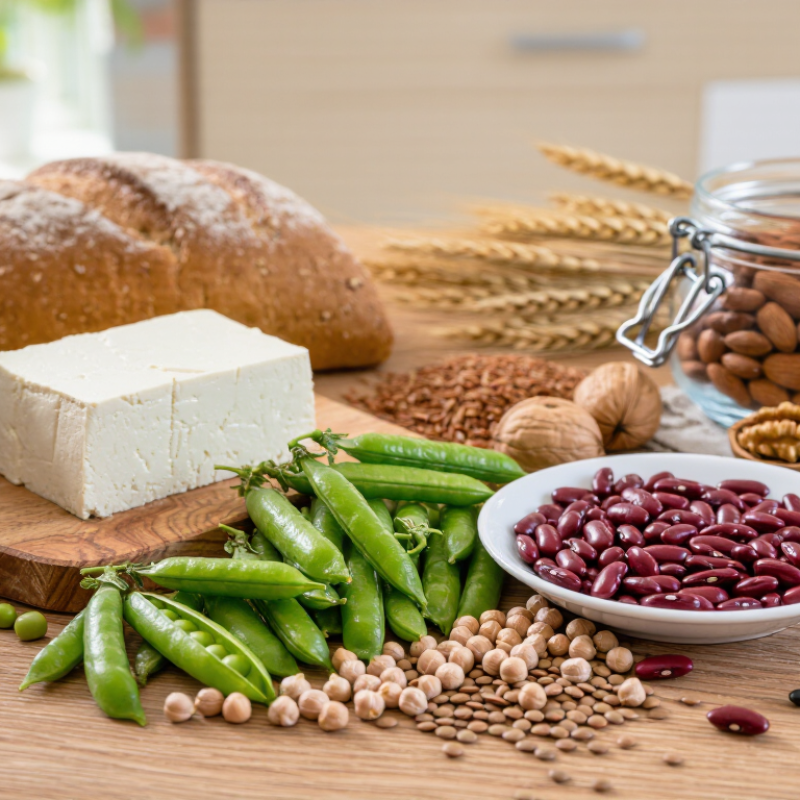
Plant Protein Defined: Essential Amino Acids and 4 kcal per Gram
Plant protein is protein supplied by foods such as beans, lentils, peas, grains, nuts, and seeds. Its building blocks are amino acids. The body can make some, but it must obtain nine indispensable amino acids from food. Plant sources contain these amino acids in varying proportions; soy, for example, provides all nine, while some grains contain relatively little lysine. That matters.
Protein also supplies energy: standard nutrition labeling assigns it 4 kilocalories per gram. The U.S. Food and Drug Administration’s nutrition-labeling rules use this factor, so 20 grams of protein represents about 80 kilocalories from protein. The number is useful, but tidy. It does not describe a food’s full nutritional value or account for differences in digestion.
Protein quality depends on more than the total grams listed on a label. The FAO’s 2013 report, Dietary Protein Quality Evaluation in Human Nutrition, recommends assessing digestible indispensable amino acids, rather than relying only on crude protein totals. In practical terms, a bowl of lentils and rice offers a broader amino-acid pattern than either ingredient alone. They do not have to be eaten in the same bite—or even at the same meal. Still, “plant protein” is a broad category, and one simple number cannot capture every food’s quality.
Main Plant Protein Types: Legumes, Grains, Nuts, Seeds, and Vegetables
Plant proteins come from several food groups, and each brings a different mix of protein, fiber, and minerals. Legumes include lentils, chickpeas, beans, and peas. A cup of cooked lentils adds protein and fiber to soup or a grain bowl. Soy foods, such as tofu and tempeh, are also legumes; their texture and cooking uses differ from whole beans. Grains contribute protein too. Oats, quinoa, and whole-wheat bread can add to a meal’s total, although most grains provide less protein per serving than many legumes. Pairing foods can help create variety across the day. A bean-and-rice bowl is one practical example, not a strict rule for every plate.
Nuts and seeds offer protein in compact portions, along with fats and other nutrients. Pumpkin seeds can be sprinkled over roasted vegetables, while peanut butter can be spread on toast. Small details matter. Vegetables generally contain less protein per serving, but peas, spinach, and broccoli still contribute alongside their vitamins and fiber. Their protein adds up as part of a varied diet, rather than acting as a stand-alone source. Portions also matter: a small handful of almonds is useful, but it is not equivalent to a large serving of beans. It can be tempting to rank these foods by protein alone; that misses their different textures, nutrients, and roles in everyday meals.
Legume Proteins: USDA Data Shows Cooked Lentils Have 9 g per 100 g
Plant proteins come from legumes, grains, nuts, seeds, and some vegetables. Among these, lentils are an especially practical legume: they cook into a soft, earthy base for soups, salads, or a bowl with rice. USDA FoodData Central reports 9.02 grams of protein per 100 grams of boiled lentils without salt. That is about 9 grams in a modest cooked portion. Small, but useful. The same entry lists roughly 7.9 grams of dietary fiber per 100 grams, so lentils contribute more than protein alone.
The figure describes cooked lentils, not dry lentils; water absorbed during cooking changes their weight and nutrient concentration. Serving size matters, too. A cup of cooked lentils weighs more than 100 grams and therefore provides more total protein. Lentils also contain carbohydrates, so they are not a concentrated protein source in the same way as some isolated plant proteins. Still, they can anchor a filling meal. Pairing them with grains adds variety to the plate, though no single combination is required at every meal. The Food and Agriculture Organization’s 2016 report on pulses highlights their nutritional value and role in food systems. Data are helpful, but real portions are rarely measured perfectly.
Plant Proteins: Protein in Cooked Legumes
Cooked lentils provide about 9.02 g of protein per 100 g. The values shown are close across these common legumes, so each can contribute plant-based protein to a meal.
Protein values per 100 g of cooked legumes; approximate values from USDA FoodData Central entries.
Grain and Seed Proteins: USDA Data Shows Cooked Quinoa Has 4.4 g per 100 g
Plant proteins are proteins found in foods such as beans, nuts, seeds, and grains. Quinoa is often grouped with grains, though botanically it is a seed. Its protein content makes it a useful option for people building meals around plant foods. It also provides carbohydrates and minerals, so it is more than a protein source.
USDA data lists cooked quinoa at about 4.4 grams of protein per 100 grams. That is roughly a small bowl’s worth, depending on how it is served. Water matters. Cooking adds weight through absorbed water, so 100 grams of cooked quinoa contains less protein than 100 grams of dry quinoa. Comparing foods by the same weight only works when their cooked or uncooked state matches.
Quinoa contains all nine essential amino acids, although its protein amount per serving is modest compared with some beans or concentrated protein foods. A warm portion can add substance to a plate, but it may not carry the whole meal’s protein needs. Pairing it with lentils, tofu, or seeds can add more. It is easy to overlook serving size when reading a nutrient figure; 4.4 grams sounds clear, but the bowl in front of you may weigh far more or less than 100 grams.
Plant Protein Processing: How Tofu, Tempeh, and Seitan Are Made
Tofu, tempeh, and seitan begin with different raw materials, so processing shapes their textures as much as their flavors. For tofu, dried soybeans are soaked, ground with water, and cooked. Straining separates the soy milk from the pulp; a coagulant gathers proteins into soft curds. For firmer tofu, curds are pressed in a mold, while silken tofu is usually set in its container. Small differences matter.
Tempeh uses cooked soybeans, often dehulled, inoculated with a food-grade mold culture, and incubated in warm, controlled conditions. Fine white threads bind the beans into a sliceable cake, typically over about one to two days. Clean equipment and steady temperatures are important, since unwanted microbes can grow too. The finished cake should smell pleasantly earthy, not sharply unpleasant.
Seitan starts with wheat gluten. Flour dough can be washed until starch rinses away, leaving elastic gluten; cooks may also hydrate concentrated wheat gluten. The dough is seasoned and shaped, then steamed, simmered, or baked. Broth changes its character. Too much kneading can make seitan rubbery, and home batches do not always turn out evenly. This comparison is useful, but imperfect: recipes and equipment can alter each result.
What Are Plant Proteins and Their Types? - Plant Protein Processing: How Tofu, Tempeh, and Seitan Are Made
| Plant Protein Type |
Main Source |
How It Is Made |
Typical Texture and Uses |
Approximate Protein per 100 g |
Notable Characteristics |
| Tofu |
Soybeans |
Soybeans are soaked, ground with water, and filtered to make soy milk. A coagulant is added to form curds, which are pressed into blocks. |
Ranges from soft and custardy to firm and dense. Used in soups, stir-fries, salads, and baked or grilled dishes. |
About 8–17 g, depending on firmness and moisture content |
Neutral flavor; absorbs seasonings well. Made by coagulating soy milk rather than fermenting it. |
| Tempeh |
Soybeans, traditionally |
Cooked soybeans are inoculated with a food-grade culture and fermented. The culture binds the beans into a compact cake. |
Firm, sliceable, and slightly nutty. Commonly steamed, pan-fried, baked, or crumbled into dishes. |
About 18–20 g |
Fermentation creates a distinctive savory flavor and a dense, whole-bean texture. Other legumes or grains may also be used. |
| Seitan |
Wheat gluten |
Wheat flour dough is washed to remove much of its starch, leaving gluten, which is then seasoned and cooked, often by simmering or steaming. |
Chewy and meat-like. Often sliced, shredded, or formed into pieces for stir-fries, sandwiches, and stews. |
About 20–25 g |
Usually high in protein, but it contains wheat gluten and is not suitable for people who must avoid gluten. |
| Legumes |
Beans, lentils, peas, and chickpeas |
Typically dried, soaked when needed, and cooked until tender. Some are also processed into flours or protein ingredients. |
Soft or creamy when cooked; used in soups, salads, spreads, curries, and patties. |
About 7–10 g for many cooked varieties |
Provide protein along with fiber and other nutrients. Protein content varies by legume and preparation. |
| Plant Protein Concentrates and Isolates |
Commonly soy, pea, or wheat |
Protein-rich components are separated from the original crop using mechanical and/or aqueous processing; isolates undergo further concentration. |
Usually powders or ingredients blended into drinks, meat alternatives, bars, and other foods. |
Varies by ingredient and product; concentrates and isolates are protein-dense |
Processing method and formulation affect nutrition, flavor, and texture. Check product labels for specific values. |
Note: Protein values are approximate ranges for prepared foods and can vary with moisture, ingredients, and processing. For packaged products, use the nutrition information on the label.
FAQS
Plant protein comes from foods such as beans, lentils, peas, grains, nuts, and seeds. Its building blocks are amino acids.
Plant foods contain them in varying proportions. Soy provides all nine, while some grains contain relatively little lysine. That difference matters.
Protein provides about 4 kilocalories per gram. So 20 grams supplies roughly 80 kilocalories. That is approximate.
Boiled lentils contain about 9 grams of protein per 100 grams. They also provide around 7.9 grams of fiber.
No. It describes cooked lentils without salt. Absorbed water changes their weight and nutrient concentration.
No. They offer a broader amino-acid pattern together, but do not need to be eaten in the same meal. Real portions vary.
Tofu is made by curdling cooked soy milk, then pressing or setting the curds. Tempeh uses cooked soybeans bound by fine white threads during incubation.
Seitan is made from wheat gluten, either washed from dough or hydrated from concentrated gluten. It can be steamed, simmered, or baked. Too much kneading may make it rubbery.
Conclusion
What are vegetal proteins? They are proteins obtained from plants and provide 4 kcal per gram, just like other protein sources. They can supply essential amino acids, though the amounts vary between foods. Main sources include legumes such as lentils and beans, grains such as quinoa, nuts, seeds, and some vegetables. Combining a variety of these foods across meals can help create a balanced diet with a broad range of amino acids and nutrients.
Legumes are especially useful protein sources: cooked lentils contain about 9 grams of protein per 100 grams. Among grains and seeds, cooked quinoa provides about 4.4 grams per 100 grams. Plant foods can also be processed into concentrated or versatile protein products. Tofu is made by curdling soy milk and pressing the curds; tempeh is made by fermenting soybeans; and seitan is produced from wheat gluten. These foods offer different textures and ways to include plant protein in everyday meals.

 Entry Biology